
 blog
blog
Is Specialized K9 Management Software Worth the Cost?
Table of Contents
- What Specialized K9 Management Software Actually Does
- K9 Incident Management Software: Tracking Deployments and Use-of-Force Reports
- Best Practices for K9 Record Keeping in Law Enforcement
- K9 Training Record Templates vs. Digital Systems
- Cost Breakdown: What You're Really Paying For
- Pros and Cons of Specialized K9 Management Software
- When Spreadsheets Stop Being Enough
- Frequently Asked Questions
Last Updated: September 16, 2026
What Specialized K9 Management Software Actually Does
Specialized K9 management software is a record-keeping system built for the specific documentation demands of police and search-and-rescue dog units. It centralizes training logs, deployment histories, certifications, and incident reports in one searchable system.
That definition matters because generic record tools were never designed for this work. A K9 handler's records have to survive defense motions, internal audits, and certification reviews. Trakker is built around that reality: training, deployments, and certifications live in one place, and reports come out in a format that holds up in a hearing.
The question in the title is not really about features. It is about whether the cost of a dedicated system beats the cost of a records failure.
K9 Incident Management Software: Tracking Deployments and Use-of-Force Reports
K9 incident management software is the module that captures what happened on a deployment: where the team was sent, what the dog did, what the handler observed, and how the incident concluded. It replaces the after-shift memory dump with a structured entry made while details are fresh.
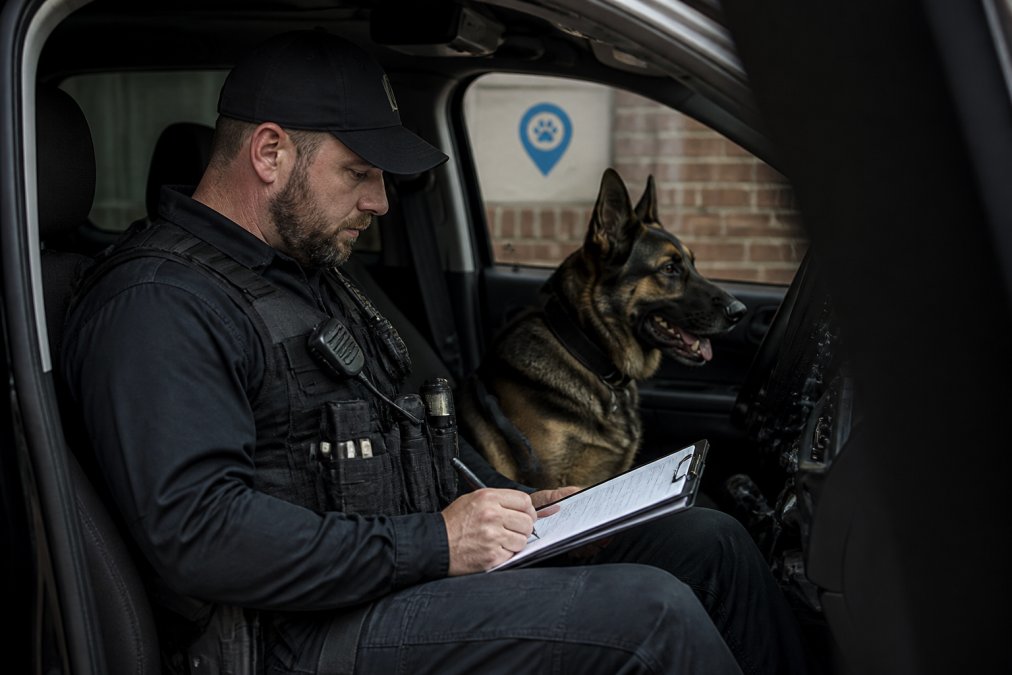
The practical difference shows up in the details. A use-of-force narrative written three days later reads differently than one logged the same night, and opposing counsel knows it. Structured fields also force completeness: handler, dog, location, duration, find or no-find, injuries, and supervisor review.
Best Practices for K9 Record Keeping in Law Enforcement
Best practices for K9 record keeping start with one rule: write it down the day it happens. Everything else, from formatting to retention, follows from that habit.
The International Association of Chiefs of Police model policy library is a reasonable starting reference for agencies formalizing their documentation standards. Four practices carry most of the weight:
- Log every training session with date, duration, and specific skills worked
- Record deployments separately from training, even when the dog found nothing
- Attach supervisor review to any incident involving contact or force
- Keep certification documents linked to the records they authorize
A common mistake is treating training logs as proof of proficiency. They are proof of attendance. The distinction matters when a defense attorney asks what the dog was actually certified to do on the date of the search.
K9 Training Record Templates vs. Digital Systems
K9 training record templates work fine for a unit of one or two handlers. Past that, the paper trail becomes the problem.
Templates give you consistency and nothing else. They do not search, they do not remind, and they do not tell you that a certification lapsed six weeks ago. Digital systems trade the flexibility of a printed form for structure that catches errors before they reach a courtroom.
| Factor | Paper Templates | Spreadsheets | Dedicated K9 Software |
|---|---|---|---|
| Search across years of records | Manual | Possible, slow | Instant |
| Certification expiry alerts | None | Manual tracking | Built in |
| Court-ready report export | Retype | Reformat | One-click |
| Multi-handler consistency | Varies by handler | Varies by author | Standardized |
| Audit trail | None | Weak | Full history |
The honest limitation: dedicated systems require your team to actually enter data. A template on a clipboard gets filled in at the scene. Software gets filled in later, and later is where records go missing.
Cost Breakdown: What You're Really Paying For
The real cost comparison is not software versus paper. It is a subscription versus the staff hours, storage, and legal exposure that paper records create.
Most agencies evaluating K9 management software are weighing three cost lines: licensing, implementation time, and the ongoing labor of maintaining records. Licensing varies by team size and deployment model, so the only reliable figure is the one on the vendor's own pricing page. Trakker publishes its pricing and offers a free trial, which lets a unit test the workflow before committing budget.
Implementation is the line most buyers underestimate. Someone has to migrate existing logs, set up your certification types, and train handlers who have been doing this the same way for fifteen years.
Pros and Cons of Specialized K9 Management Software
The case for specialized software is strongest where documentation carries legal weight. The case against it is strongest where a unit is small, stable, and disciplined about paper.
Pros:
- Court-ready reports generated from structured data rather than retyped narratives
- Certification tracking that flags expirations before they become deployment problems
- One searchable record set for supervisors, administrators, and auditors
- Built-in alignment with ANSI/ASIS standards for canine team operations where the standard applies to your program
Cons:
- Requires consistent data entry from every handler, including the ones who resist it
- Migration of historical records takes real staff time
- Smaller units may not generate enough volume to justify the overhead
The deciding factor is usually not team size. It is how many of your records have ever been challenged.
When Spreadsheets Stop Being Enough
Spreadsheets stop working the moment two people need to trust the same record. That is the honest threshold.
A single handler with a well-maintained workbook can run a clean program for years. Add a second handler, a supervisor who needs to audit, or a court date, and the workbook becomes a liability. Version conflicts, broken formulas, and a file that only one person understands all surface at the worst possible time.
If your unit has ever had a case thrown out over documentation, you already know the answer to the cost question. Trakker was built by a HRD K9 handler who has lived that problem. It is designed specifically for SAR, police and working-dog teams, with a primary focus on SAR and full support for law enforcement. The new ANSI 076 standards are built in, so compliance visibility comes with the system rather than a separate audit.
Frequently Asked Questions
What are the benefits of using specialized software for K9 units?
Specialized k9 management software centralizes training logs, deployment records, and certification tracking in one searchable system. It reduces the risk of lost paper logs, speeds up report retrieval for court, and gives supervisors a real-time view of unit compliance. For agencies managing multiple handlers, the time saved on documentation alone often justifies the investment.
How does K9 management software improve court-ready reporting?
Court-ready reporting requires complete, timestamped, tamper-resistant records. Specialized k9 management software captures training and deployment data as it happens, stores it in a structured format, and generates reports that meet evidentiary standards. This reduces the chance of gaps or inconsistencies that opposing counsel can exploit. Systems built for K9 operations also align with standards like ANSI 076 for compliance visibility.
Is digital record keeping more secure than paper logs for K9 teams?
Digital systems offer audit trails, access controls, and backup redundancy that paper logs cannot match. Paper records can be lost, damaged, or altered without detection. A secure k9 management software platform logs every entry and edit, which strengthens the defensibility of your records if they are challenged in court or during an audit.
How hard is it to get a small K9 unit started with management software?
Most teams with three to four handlers can get up and running within a few days. A free trial lets you test the system with real data before committing. Look for providers that offer onboarding support and training for your whole team. The goal is consistent use across every handler, so ease of adoption matters as much as features.
The challenge is not choosing software. It is getting an entire unit to change how it documents work that has been done the same way for years. Trakker makes that transition concrete: training, deployment, and certification tracking in one centralized location, court-ready report generation, and ANSI 076 compliance built in for teams that need it. Start a free trial and run it against your next certification cycle before you decide.