
 blog
blog
Digital Tools for SAR Team Deployment Coordination
Table of Contents
- Why SAR Team Deployment Coordination Demands the Right Tools
- Core Requirements for Effective Deployment Coordination
- Incident Management Software for SAR Operations
- SAR Deployment Documentation Best Practices
- K9 Unit Record Management and Operational Efficiency
- Cybersecurity and Data Privacy in Field Operations
- Selecting the Right Tool for Your Team's Needs
- Frequently Asked Questions
Last Updated: September 21, 2026
Why SAR Team Deployment Coordination Demands the Right Tools
Search and rescue operations depend on split-second decisions and flawless communication. When a team receives a dispatch, every minute matters. The difference between finding someone quickly and a delayed response often comes down to how well your team coordinates in the field.
SAR team deployment coordination is the backbone of effective operations. It connects your incident command center with field personnel, ensures real-time situational awareness, and creates an auditable record of every action taken. Without the right tools, teams rely on radio chatter, paper logs, and memory, approaches that fail under pressure and don't hold up in court.
The teams that respond fastest and document best aren't using spreadsheets or fragmented systems. They're using purpose-built software that centralizes data, enables real-time tracking, and generates defensible records automatically.
This guide covers the core capabilities your team needs to select and implement the right digital tools for SAR team deployment coordination. Whether you're a volunteer organization with five handlers or a professional unit with fifty, the principles remain the same: visibility, communication, accountability.
Core Requirements for Effective Deployment Coordination
Not all digital tools are built equal. A general project management platform won't give you what a specialized SAR system can deliver. Your deployment coordination system needs to handle real-time field operations, integrate with emergency services infrastructure, and produce records that satisfy legal scrutiny.
Real-Time Tracking and Geospatial Intelligence
Your team moves through terrain, buildings, and conditions that change minute by minute. Real-time tracking shows exactly where each handler and K9 unit is located at any given moment. This isn't just about knowing who's where, it's about preventing duplicate searches, coordinating team movements, and responding instantly if someone needs backup.
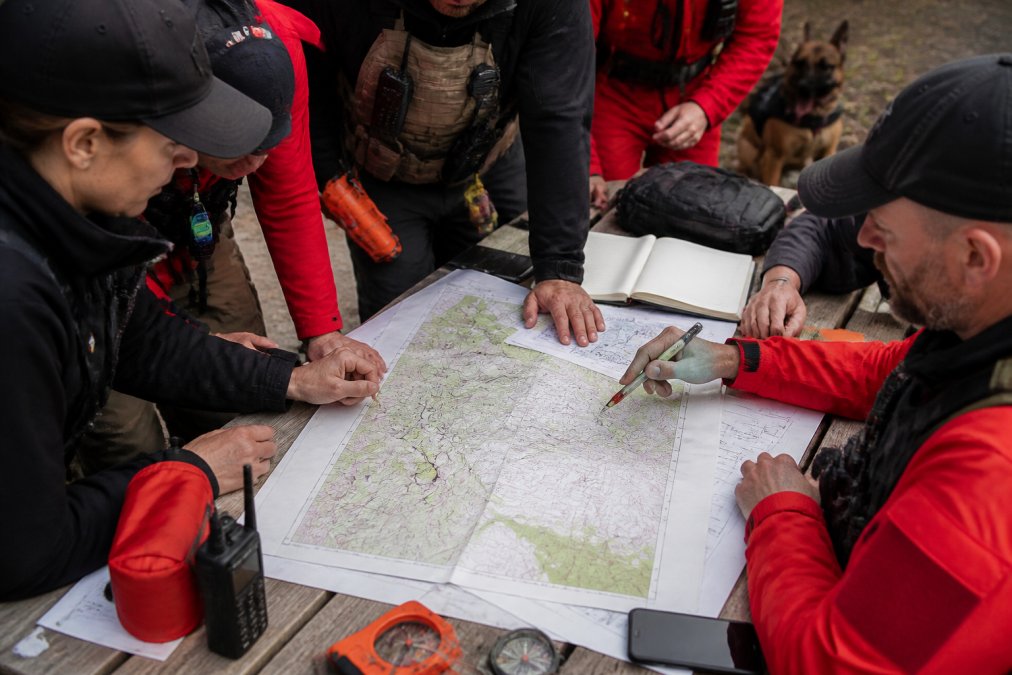
Geospatial intelligence layers mapping data with operational context. A handler can see not just their location but terrain features, hazard zones, previously searched areas, and the location of other team members on a single map. This shared situational awareness prevents teams from working at cross-purposes and ensures incident command has an accurate common operating picture.
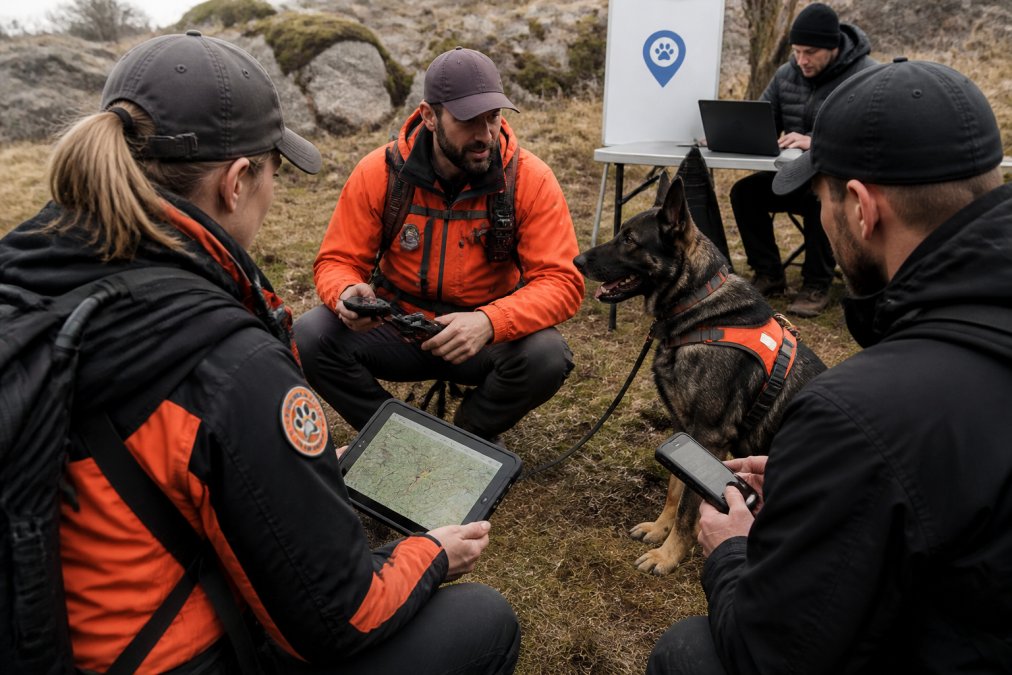
The system should support offline functionality. In remote areas or during operations in buildings with poor signal, handlers need their maps and critical data to remain accessible. When connectivity returns, the system syncs automatically without losing information.
Field-to-Command Communication
Radio remains essential, but modern systems augment it with structured data channels. Instead of relying solely on voice traffic, handlers can send status updates, photos, GPS coordinates, and observations directly into the system. Incident command receives these updates in real-time and can push instructions, map updates, or resource requests back to field teams.
This dual-channel approach reduces radio congestion, ensures critical information reaches the right people, and creates a timestamped record of communications. When a handler reports "suspect vehicle heading north on Route 7," that observation is logged automatically with location data, time, and handler identity.
Common Operating Picture
A common operating picture consolidates all operational data into one view that every authorized user can access simultaneously. This includes active incidents, deployed resources, search boundaries, hazard zones, weather conditions, and team status. When everyone sees the same information, coordination becomes exponentially more effective.
The system should support role-based access so incident commanders see different data than field handlers, and supervisors see different dashboards than frontline personnel. A handler needs their immediate area and team status; command needs resource allocation across multiple teams; supervisors need compliance and performance data.
Incident Management Software for SAR Operations
Purpose-built incident management software differs fundamentally from general business tools. It's designed for the tempo of emergency response, the complexity of multi-agency coordination, and the legal requirements of law enforcement and search operations.
Centralized Data and Tactical Coordination
Every deployment generates data: who was deployed, when they arrived, where they searched, what they found, how long they worked, and what resources they used. Centralized storage means this data feeds into reports, compliance audits, and performance analysis automatically rather than requiring manual compilation.
Tactical coordination features let incident command allocate resources, assign search grids, modify boundaries, and track progress against operational objectives. As conditions change, weather deteriorates, new information emerges, additional resources arrive, the system adapts quickly. Teams receive updated assignments without confusion or delays.
Offline-First Functionality in Remote Operations
Many search and rescue operations occur in areas with unreliable cellular coverage. A system built around cloud-first architecture fails when connectivity drops. Incident management software for SAR must work offline, storing all operational data locally on field devices, then syncing when connection returns.
This capability is non-negotiable. Your team can't pause an operation because their mapping tool lost signal. Handlers need access to their assignments, maps, and previous search data regardless of network conditions. When you return to coverage, the system reconciles data from all field devices without conflicts or data loss.
Inter-Agency Data Sharing Protocols
Search and rescue often involves multiple agencies: county sheriff's office, state police, federal resources, volunteer organizations, and private contractors. Each agency may use different systems. Without standardized data sharing protocols, critical information stays siloed.
Modern incident management platforms support standard data formats and APIs that allow different systems to exchange information. A handler from one agency can see relevant operational context from another agency's system. Incident command can consolidate resource status across all participating organizations into a unified operational view.
SAR Deployment Documentation Best Practices
Documentation serves two purposes: operational accountability during the incident and legal defensibility afterward. Your system must support both simultaneously.
Building Court-Ready Reports
Search and rescue operations sometimes lead to legal proceedings. Evidence collected, decisions made, and actions taken during deployment must be documented in a way that withstands scrutiny. A handler's report of where they searched, what they observed, and what evidence they collected becomes court testimony.
Your incident management system should generate reports automatically from operational data rather than requiring manual compilation. Timestamps, GPS coordinates, handler identity, and observations are all captured in real-time. When an incident concludes, reports can be generated that show exactly what happened, when it happened, and who was involved, with no ambiguity or gaps.
The system should support attachments for photos, video, and evidence documentation.
Compliance and Audit Trails
Regulatory requirements for search and rescue operations vary by jurisdiction and agency type. Your system must track compliance automatically. If your state requires specific documentation for K9 deployments, the system should enforce those requirements and flag missing information before reports are finalized.
K9 Unit Record Management and Operational Efficiency
K9 units require specialized tracking beyond standard deployment coordination. Certification status, training records, deployment history, and performance metrics all feed into operational decisions and legal compliance.
Certification and Deployment Tracking
Each K9 handler and dog team must maintain current certifications. These certifications specify what tasks the team is qualified to perform, narcotics detection, tracking, area search, evidence recovery. A handler certified for narcotics detection cannot legally be deployed for tracking without recertification.
Resource Allocation and Team Check-Ins
Effective SAR team deployment coordination requires knowing which resources are available, where they are, and what their current status is. A handler might be available but fatigued after a long operation. A K9 might be effective but needs rest before another deployment. A vehicle might need maintenance.
Cybersecurity and Data Privacy in Field Operations
Field operations generate sensitive data: locations of handlers, details of incidents, information about K9 capabilities and deployment tactics, and personal information about handlers and their families. This data must be protected.
Selecting the Right Tool for Your Team's Needs
Choosing an incident management system is a significant decision that affects operations for years. The selection process should account for your team's size, existing infrastructure, and specific operational requirements.
Scalability for Smaller Departments
Not all incident management software is designed for small teams. Some platforms are built for large metropolitan police departments with hundreds of handlers and complex multi-division coordination. These systems are overkill for a volunteer organization with five K9 handlers.
Integration with Existing Systems
Your team probably already uses some systems: dispatch software, records management systems, evidence tracking, or general police department infrastructure. Your new incident management tool shouldn't exist in isolation. It should integrate with systems already in place.
Implementation and Team Adoption
The best software fails if your team doesn't use it consistently. Implementation requires planning, training, and ongoing support. Your selection process should account for vendor support during implementation.
Frequently Asked Questions
What features are essential for SAR deployment coordination software?
Essential features include real-time GPS tracking, geospatial mapping, centralized incident command capabilities, field-to-command communication, and resource deployment coordination. Court-ready reporting is critical for K9 units, as documentation must withstand legal scrutiny. Look for platforms that offer offline-first functionality so teams remain connected in areas with poor signal, and inter-agency data sharing protocols to coordinate with multiple responding units during complex incidents.
How do digital tools improve incident management for K9 units?
Digital incident management software eliminates fragmented record-keeping across spreadsheets and paper logs. A centralized platform creates a common operating picture where all team members see the same deployment status, asset locations, and mission data in real time. This reduces communication gaps, speeds up tactical decisions, and ensures every handler has current situational awareness. The result is faster response times and more coordinated field operations during time-critical search and rescue missions.
Why is court-ready reporting important for search and rescue teams?
SAR K9 units often provide evidence or testimony that becomes part of legal proceedings. Poorly documented deployments or training records can undermine case credibility or get cases dismissed. Court-ready reports generated by specialized software create defensible audit trails showing when handlers were deployed, what actions were taken, and how decisions were made. This documentation protects both the team and the integrity of the mission, ensuring your operational records withstand legal challenge.
How can smaller K9 departments benefit from SAR deployment coordination tools?
Smaller departments with 3-4 handlers gain the same operational rigor as larger agencies without paying for enterprise-level complexity. Streamlined tools designed for working-dog teams handle training tracking, deployment records, and certification management in one place. This eliminates manual data entry, reduces administrative burden on already-stretched teams, and ensures compliance with standards like ANSI 076. Scalable solutions grow with your department as staffing changes, without requiring expensive overhauls.